
✏️ SERVICES
Creative ideation
Research, Testing, UI, Illustration, Content strategy, UX, Copywriting, Business planning, Coding, Prototyping, Marketing
📅 DATE
2018
🖥️ PRODUCTS
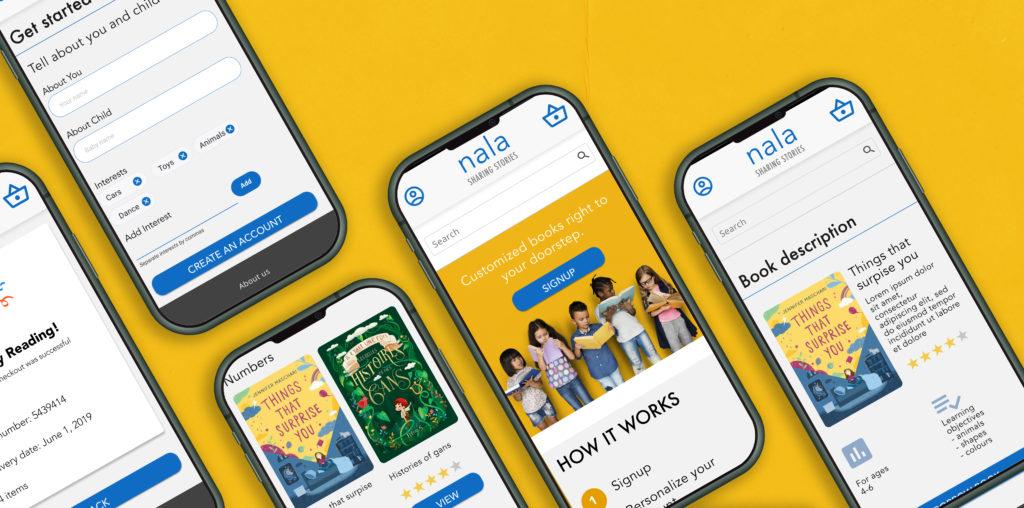
PWA App
⚙️ SECTOR
E-Learning
CHALLANGE
KinderReaders is a company dedicated to creating meaningful learning experiences for children. The team was exploring how to differentiate their offering through storytelling and reading experiences that support early literacy, imagination, and connection between children and caregivers.
The challenge was not simply to design another reading product, but to explore how storytelling could become a richer, more engaging experience that fits into the realities of everyday family life.
THE APPROACH
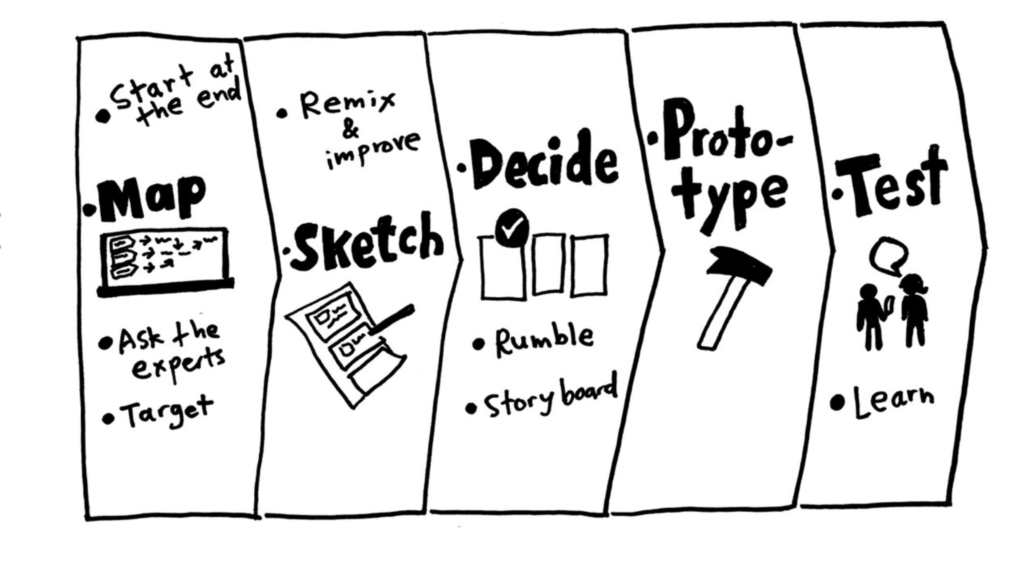
We followed the Design Sprint methodology, originally developed by Jake Knapp at Google, as a structured way to explore the problem space, test assumptions, and validate ideas quickly.
While a traditional sprint runs over five days, we adapted the process into a focused three-day sprint. This allowed us to move efficiently while still respecting the intent and rigor of the methodology.
The sprint helped us move from broad questions to concrete concepts, grounding creativity in shared understanding and real user feedback.
GOAL AND THOUGHT STARTER
At the outset, we aligned on a set of guiding goals to frame our thinking:
-
Support children in developing literacy skills through sounds, words, and language
-
Encourage a love for books and storytelling
-
Spark imagination and curiosity
-
Strengthen social and communication skills through shared experiences
These goals acted as a north star throughout the sprint, helping us evaluate ideas beyond novelty and toward long-term value.
DESIGN BREAKDOWN
We ran the design sprint over 3 days instead of the regular 5. We found friends and colleagues to test our prototype for quick iterations.
DAY 1: UNDERSTANDING THE PROBLEM
We focused on framing the challenge and building a shared understanding of the space.
Activities included:
-
Reframing the core challenge
-
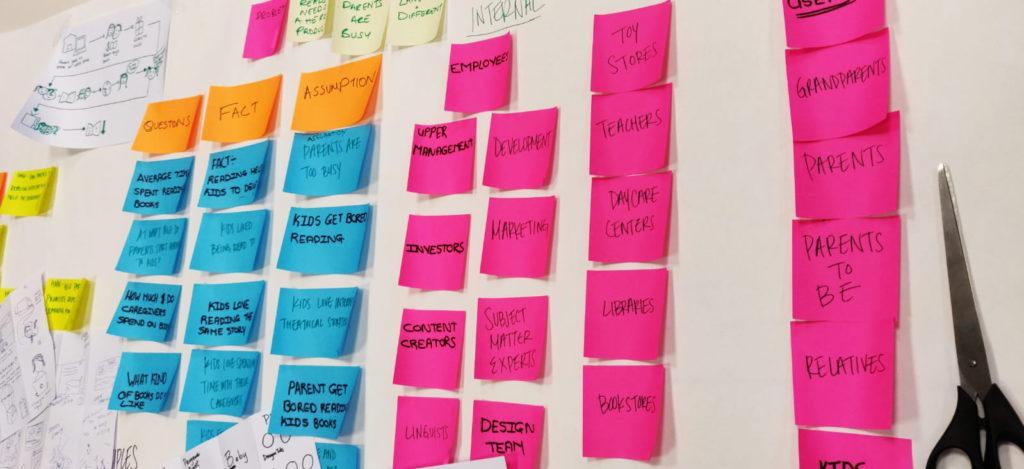
Sprint briefing and stakeholder mapping
-
Defining sprint questions
-
Mapping the problem space
-
Exploring constraints and opportunities
-
Generating How Might We questions
DAY 2: IDEATION AND PROTOTYPING
This day centered on divergent thinking followed by focused decision making.
Activities included:
-
Lightning demos for inspiration
-
Defining design principles
-
Crafting a clear value proposition
-
Ideation through sketching, including Crazy 8s
-
Deciding what to prototype
-
Building a testable prototype
-
Writing a testing script
DAY 3: TESTING AND LEARNING
We tested the prototype with caregivers and parents to gather early feedback.
Activities included:
-
Running user tests
-
Synthesizing observations
-
Highlighting lessons learned
-
Identifying next steps for future iterations
RESEARCH INPUTS
Throughout the sprint, we grounded our decisions in both questions and known facts.
We explored questions such as:
-
How much time do caregivers typically spend reading with children
-
At what age reading habits usually begin
-
How caregivers invest in children’s books
-
What types of stories children are drawn to
We also worked from established insights, including:
-
Reading supports cognitive and emotional development
-
Children enjoy being read to and often repeat favorite stories
-
Shared reading strengthens bonds between children and caregivers
-
Children respond strongly to visual storytelling
We paired these insights with assumptions that were explicitly acknowledged and tested rather than taken for granted.
TEAM AND COLLABORATION
The sprint team brought together complementary strengths.
I contributed expertise in visual design and interface thinking. Lorina brought startup and marketing experience, and Aneeta contributed project management and user research expertise. What we shared was a strong appreciation for design as a collaborative, exploratory discipline.
This diversity strengthened the quality of discussion, challenge, and synthesis throughout the sprint.
IDEATION AND TESTING
We used the Crazy 8 method to generate a wide range of ideas quickly. Interestingly, strong thematic overlap emerged across our sketches, reinforcing shared intuitions about what might resonate.
We tested the prototype with three caregivers through both remote and in person sessions. These tests provided valuable qualitative feedback on clarity, desirability, and emotional response.
EMERGING DIRECTIONS
Through dot voting and synthesis, three promising directions emerged:
-
An automated progress report informed by educators
-
Voice based storytelling that reads books aloud
-
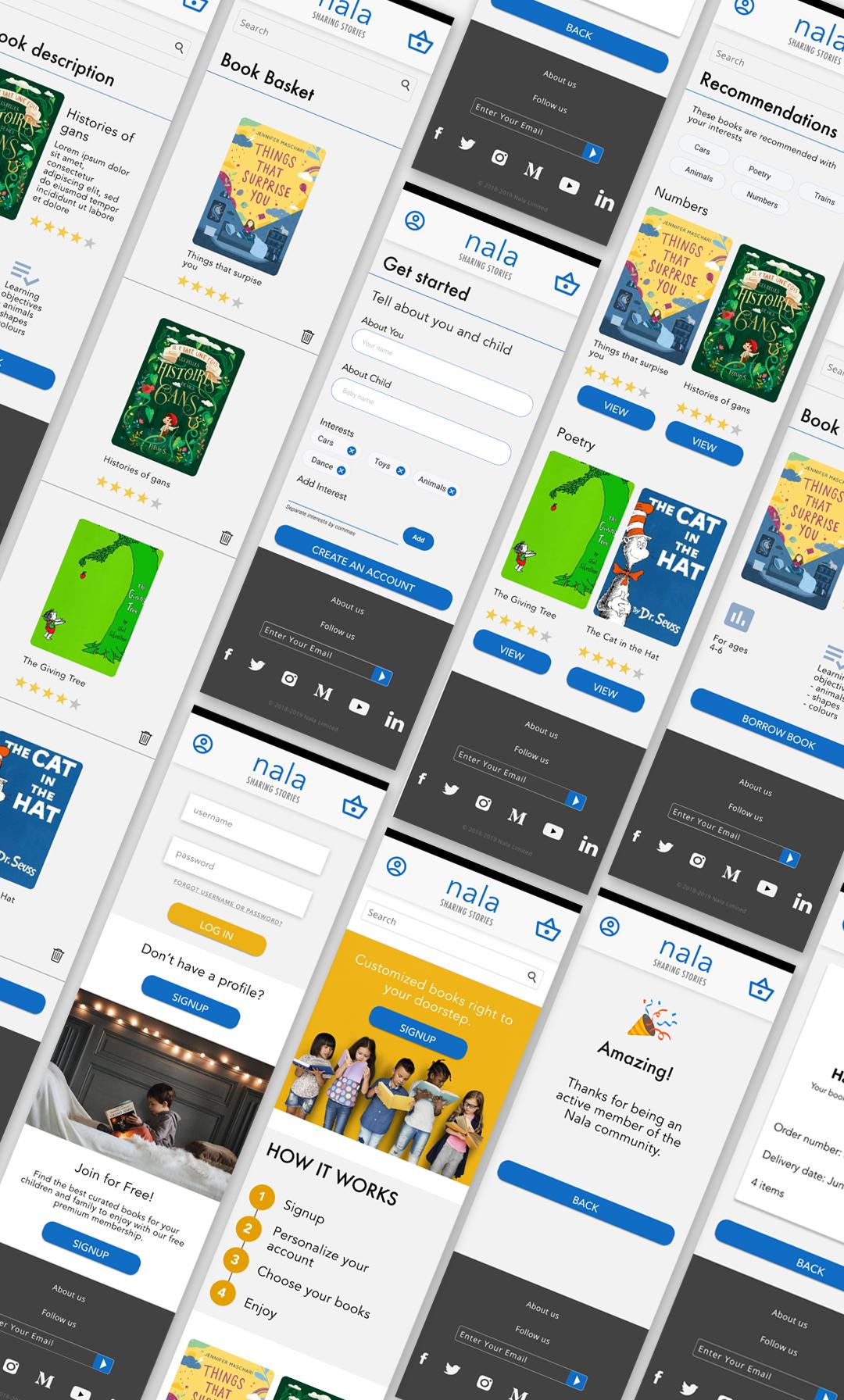
A personalized book delivery system
These concepts reflected different facets of the same ambition. Supporting literacy while respecting caregivers’ time and creating engaging, shared experiences.
LEARNINGS AND NEXT STEPS
The sprint surfaced clear opportunities for future iteration, including:
-
Improving clarity of the value proposition on first contact
-
Deepening content information and storytelling context
-
Expanding personalization to better support different families
-
Designing a cohesive experience across all touchpoints, from discovery to delivery
REFLECTION
This project was an exploration rather than a final product. Its value lay in the disciplined application of design methodology, rapid learning, and respectful collaboration.
Nala demonstrated how structured design processes can create space for imagination while keeping teams grounded in real user needs. It reinforced the importance of testing assumptions early, listening carefully, and designing with empathy for both children and the caregivers who support them.
Get In Touch
Liked what you saw and are curious to learn more, get in touch below.